
Julie Deckers & Nincy Debeuf
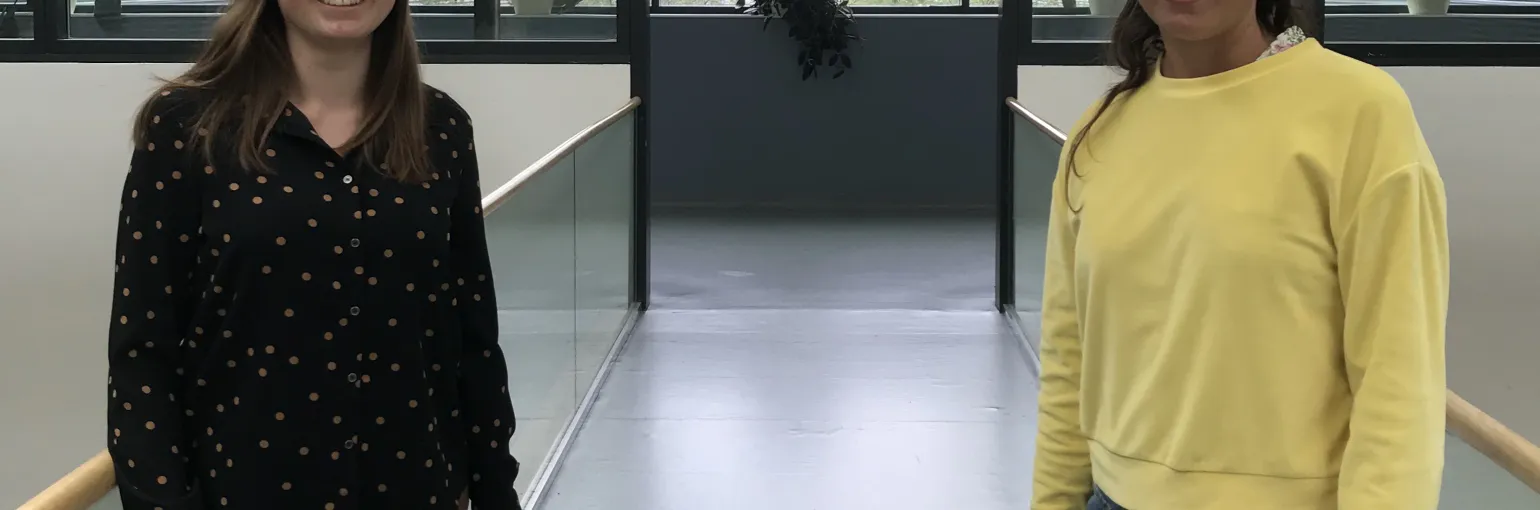
As post-docs in the Lambrecht-Hammad lab, our major interest is in the pathogenesis of immune-mediated lung diseases like allergic asthma. Over the years, our lab has studied immune responses to respiratory viral infections, because these often trigger asthma attacks. In our current projects, we are studying the impact of viruses and bacteria on asthma endotype and severity in the neonatal period and adulthood. As we have always been driven to do translational research, we felt the need to better understand how COVID-19 causes such a devastating lung disease, and how we can devise better therapies. Our PI, Prof. Dr. Bart Lambrecht has set up several clinical trials in UZ Gent, to find treatments that can relieve the detrimental inflammation seen in COVID-19 patients.
Most patients that are admitted to hospital with respiratory failure suffer from an exaggerated immune response in the lung, reflected by a so-called ‘cytokine storm’ in the rest of the body. At this stage of disease, viral replication is no longer the driver of disease. In preclinical studies, we have observed very similar findings. Mice infected with Pneumonia Virus of Mice (PVM, also an ssRNA virus like SARS-CoV2) suffer from a lethal ‘cytokine storm’, at a time when viral replication is already going down and the virus is being cleared from the body. We believe this preclinical PVM model is a good starting point to elucidate the molecular mechanisms and test immune therapies, before we can switch to modelling the actual SARS-CoV2 infection. In order to work as close to the clinic as possible, we are testing the exact same therapies in mice as those in the current personalized medicine COVID-19 clinical trials. In mice, we can further explore the underlying mechanisms and potentially improve therapeutic decision-making in the clinic. Furthermore, we are testing additional therapies in mice, with the aim to also translate these into clinical therapy. With this research, we hope to contribute to a therapy that benefits patients of the current COVID-19 pandemic, but also increase knowledge that could prevent future Coronavirus outbreaks. Meanwhile, colleagues at IRC have generated human ACE2 transgenic mice, which will allow us to work with SARS-CoV2 soon.
Given the urgency of the COVID-19 crisis, half of our lab have switched to COVID-19 research. We are privileged to work with a team of 10 lab members that were trained to work in BL2 conditions. We are in daily contact with 5 medical doctors, as well as predoctoral students from our team, that are involved in the clinical trials. As such, findings from the clinical trials can be easily translated to the mouse studies, and vice versa. Additionally, we collaborate with other research groups and companies, as we are testing multiple treatments in parallel.
It has been amazing to see how our teamwork has been lifted to a next level, with informatics platforms helping us to share and discuss data. Managing this considerable agenda during difficult circumstances has only been possible due to the eagerness and flexibility of the colleagues in our team. It has been a pleasure to work in such a good team spirit, and to feel how our mouse research has direct implications for patient care.